
Cocobi Life World - city, town
KIGLEEducational
3.9128.00 Reviews
- Version
- 1.1.6
- Installs
- 10.00M
- Age Rating
- Everyone
Screenshots
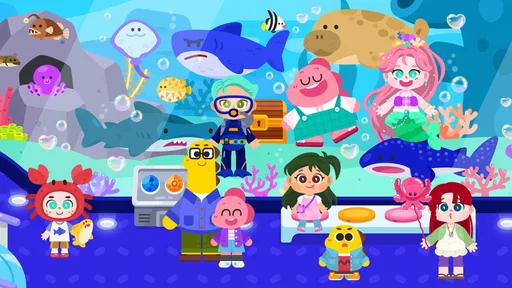
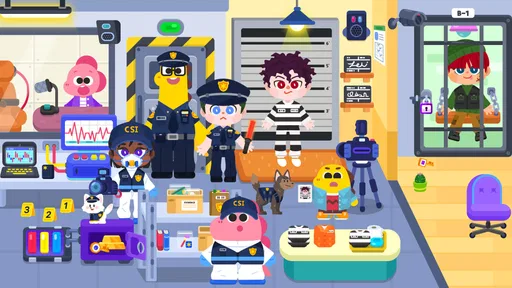
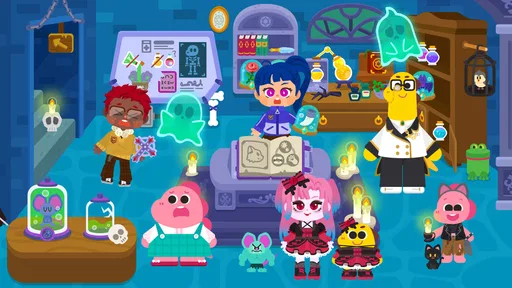
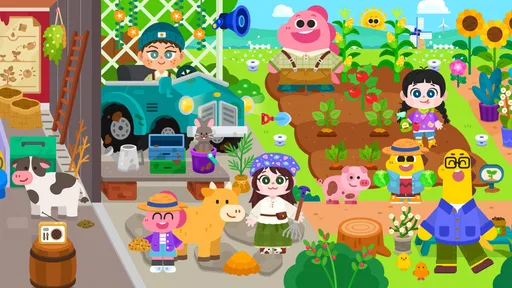
Our Review of Cocobi Life World - city, town
 Analysis by Appyee
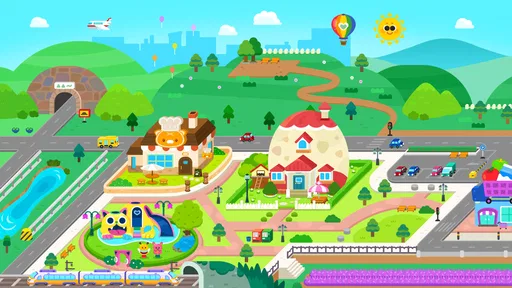
Cocobi Life World is an educational game for children that focuses on playful exploration with Cocobi, the little dinosaurs. I spent time looking at it as more than a quick distraction, because its real appeal is the way it turns a familiar town setting into a gentle space for children to choose activities, observe what happens, and make up their own small stories. That freedom is the main capability worth discussing: instead of pushing a child through a strict sequence of lessons, it gives them a world to explore at their own pace.
That design makes the game feel closer to a digital playroom than to a traditional educational quiz. There is no pressure to reach a high score or beat another player. A child can move between situations, try different interactions, and return to a favorite activity without needing to remember a complicated set of rules. In my experience, that is especially useful for younger children who learn through repetition and imitation rather than through formal instructions.
KIGLE developed the game, and its presentation is clearly aimed at families looking for approachable children’s educational games. It is free to download, rated for Everyone, and available for devices using Android 7.1 or later. The current version is 1.1.6. Those details make it fairly easy to consider for a shared family device, although the free model includes optional purchases priced from $2.20 to $2.90 per item.
Why the open-ended town matters
The most important strength is not simply that the game has a colorful setting. It is that the town gives children a reason to practice decision-making without making the activity feel like a lesson. A child can decide where to go, what to inspect, and which little scenario deserves attention. That choice may look simple to an adult, but it changes the experience from passive watching into active participation.
I see this as a useful middle ground between a video and a workbook. A video usually controls the pace completely, while a workbook expects the child to follow a specific task. Here, the child’s attention can move naturally. If a particular character or location is interesting, the child can stay with it. If it is not, moving on is part of the experience rather than a failure.
The Cocobi characters also give the world a friendly identity. The dinosaur theme is not used as a complicated story that children must memorize. Instead, it helps make ordinary town activities feel inviting. For a child who might reject an app labeled as “learning,” the characters and playful setting can lower that resistance. I would not call it a replacement for structured early education, but it can make everyday concepts easier to discuss.
One subtle benefit is the opportunity for language development during shared play. When an adult asks, “What do you think will happen?” or “Why did you choose that place?” the child has something visible to talk about. The game supplies the prompt, while the conversation supplies much of the educational value. This is one reason I prefer using it beside a parent or caregiver at first instead of treating it as an automatic babysitter.
What interaction feels like in everyday use
The game works best when the child is allowed to explore first and explain later. I would begin by letting them tap around and discover the town without correcting every choice. After that, I would ask them to describe what they are doing or invent a short story involving the dinosaurs. This turns a few minutes of screen time into practice with sequencing, vocabulary, and cause-and-effect thinking.
A useful routine is to give the child a small goal without dictating every step. For example, you might ask them to find a place where Cocobi can spend time, then let them decide how to get there and what to do. The goal is intentionally broad. If the adult gives a long list of instructions, the open-ended quality disappears and the game becomes another task to complete.
Another practical approach is to use the game as a transition activity. Before dinner, a child could explore for a short period and then tell you one thing that happened in the town. The conversation creates a natural stopping point. This is more effective than suddenly taking the device away after an unknown amount of play, particularly for children who become frustrated when an activity ends without warning.
Because the world is designed for young players, it is also worth watching how a particular child handles choice. Some children enjoy having many directions to explore. Others become distracted or repeatedly tap without building a meaningful activity. For the second group, a simple prompt from an adult can help: choose one location, play out one small story, and then switch to something else.
The strongest learning effect comes from guided imagination, not from leaving the game running unattended. That distinction matters. The app can provide a setting and characters, but the child’s thinking grows more when they explain choices, predict outcomes, and connect the virtual situation with something familiar from daily life.
A realistic family scenario
Imagine a child waiting at home while a parent finishes preparing dinner. The parent opens the game and suggests a small challenge: explore the town and create a story about where the dinosaurs are going. The child chooses a setting, moves through the situation, and begins describing what the characters are doing. After several minutes, the parent asks the child to retell the story from the beginning.
That short routine uses the game in a way that a normal cartoon cannot. The child is not only watching a character act; they are selecting actions and organizing them into a sequence. The parent can then extend the activity with ordinary questions: What happened first? Who was there? What might happen next? The app does not need to contain a formal lesson for this to become a useful learning moment.
It can also work during a quiet travel break or while waiting in a family setting, provided the child has a compatible device and the adult is comfortable with screen use. I would keep the session purposeful rather than endless. Open-ended games can be calming, but they can also make time pass unnoticed because there is no obvious finish line.
For siblings, the experience may become a shared storytelling exercise, although the game is not necessarily ideal if both children want to control the device at the same time. Taking turns can become part of the activity, but it requires adult help. If the main goal is cooperative play with several children simultaneously, a different type of game may be a better fit.
Where it differs from common alternatives
Compared with flashcard apps, this game is less direct. Flashcards are better when a parent wants a clearly defined practice session with a visible answer and repeatable structure. Cocobi Life World is better when the aim is to encourage conversation, pretend play, and independent choices. I would choose flashcards for focused review and this game for a more relaxed exploratory session.
Compared with children’s video platforms, it offers more control to the child. A video supplies a polished sequence, but the child mainly receives it. Here, the child’s decisions shape what they pay attention to. The trade-off is that the game may feel slower or less immediately entertaining for a child who prefers constant movement and finished stories.
Compared with highly structured learning games, it may provide less obvious evidence of progress. A parent looking for levels, scores, or a clear record of completed skills may find the experience too loose. That is not necessarily a defect, because the game is built around exploration, but it means expectations matter. It supports informal learning rather than replacing a planned curriculum.
The town setting also makes it different from a single-skill app. A spelling, counting, or puzzle game can target one ability with greater precision. This one has broader value through pretend play and interaction. If your child needs extra practice with one specific academic area, another app will probably be more efficient. If your child needs a friendly place to talk, choose, and invent, this format makes more sense.
The costs and small sources of friction
The free entry point is helpful for families who want to try the experience before spending anything. At the same time, optional purchases mean adults should review the device’s purchase settings before handing it over. A child may not understand that an item connected to play can involve real money. I would make that conversation part of setup rather than waiting for an accidental tap.
The average rating is 3.9 from around 8.4 thousand ratings, with more than 100 written reviews. I read that as a sign of a generally appealing idea with room for individual differences. A child’s reaction will depend heavily on whether they enjoy open-ended play. Some will happily invent stories; others will ask what they are supposed to do next.
The game has passed the ten-million-install mark, which suggests that its dinosaur-led approach has reached a large audience. Popularity alone does not guarantee a fit for every family, though. A widely installed children’s game can still be wrong for a child who becomes overstimulated by free exploration or who needs a stronger learning structure.
I also would not install it expecting a substitute for real-world play. The best use is as a prompt that leads back to conversation, drawing, role-play, or a simple activity away from the screen. After exploring the town, a child could draw one of the characters or describe a similar place they know. That follow-up helps prevent the digital world from becoming the entire activity.
Parents should also think about supervision style. Younger children may need help understanding what can be tapped and how to move on from a favorite scene. Older children may prefer to explore alone, but they can still benefit from occasional questions that turn play into storytelling. The right balance is light guidance, not constant correction.
Who will get the most from it
I would recommend it most to families with young children who enjoy dinosaurs, pretend play, and colorful town settings. It is particularly suitable when a parent wants an app that can start a conversation rather than deliver a formal worksheet on screen. Children who like choosing their own direction may find it more inviting than a sequence of quizzes.
It is also a good candidate for short shared sessions. A caregiver can use the characters to encourage a child to describe actions, practice new words, or build a beginning, middle, and end. Teachers or childcare workers might find the setting useful as a discussion starter, although the free-form design means it would need to fit around a broader activity plan.
I would be more cautious for children who need very clear instructions, measurable progression, or a tightly focused academic objective. They may become restless because the game does not constantly tell them what to solve next. In that situation, a puzzle game, phonics tool, or number-practice app would offer a clearer purpose.
It may also be a poor match for families seeking multiplayer interaction, competitive challenges, or deep long-term progression. The appeal here is gentle exploration with Cocobi, not competition. If your child measures enjoyment through winning, collecting achievements, or mastering increasingly difficult stages, this may feel limited after the initial discovery period.
The age rating of Everyone makes it approachable for a broad family audience, but an age label should not decide how a child uses it. I would still introduce the game with an adult nearby, especially because the free version includes optional purchases. Once the child understands the boundaries and shows they can move through the town calmly, more independent use becomes easier to judge.
My recommendation after using it
Cocobi Life World succeeds because it understands that educational value can come from what a child chooses to do, not only from questions with correct answers. Its town and dinosaur characters create a low-pressure setting where a child can explore, invent, and explain. The experience is at its best when an adult adds a few thoughtful prompts and then lets the child take ownership of the story.
I would install it for a child who needs a gentle, imaginative break and who enjoys making choices inside a friendly world. I would not choose it as the only learning app, and I would not expect it to satisfy children who want constant goals or advanced challenges. Its free price makes trying it straightforward, while the optional item purchases deserve a quick family check before play begins.
Overall, KIGLE’s game is a worthwhile option for informal learning through pretend play. The key is to treat the town as a starting point, not a finished lesson. Let the child explore, ask what they noticed, and connect the dinosaurs’ little adventures with ordinary life. Used that way, it offers something more valuable than a few minutes of tapping: it gives children a simple space to practice choice, language, and imagination.
Verdict
Strengths of Cocobi Life World - city, town
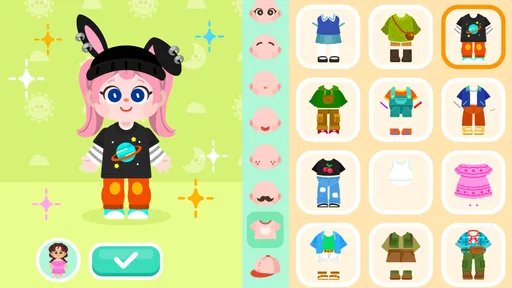
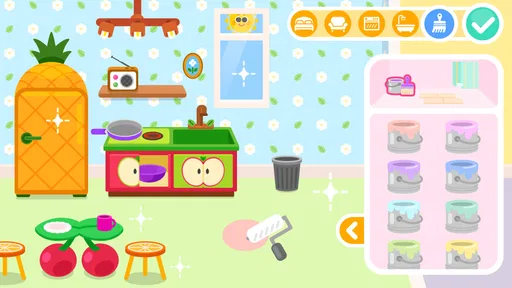
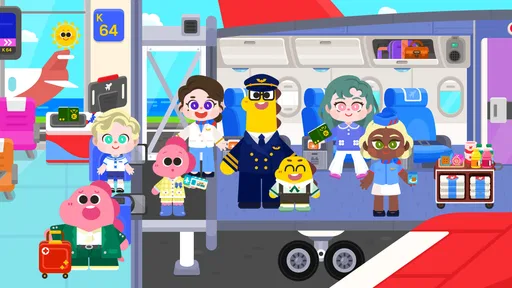
- Bright, child-friendly visuals make the world easy and enjoyable to explore.
- Simple touch controls are suitable for preschool and younger players.
- Open-ended activities encourage imaginative role-play and storytelling.
- Different locations provide variety beyond a single mini-game.
- A relaxed pace avoids stressful timers, losing conditions, or competitive pressure.
Limitations of Cocobi Life World - city, town
- Some areas and activities may require additional purchases to unlock.
- Gameplay can feel repetitive after children discover the main interactions.
- Frequent prompts may encourage parents to review in-app purchase settings.
- Limited challenge may not hold the attention of older children for long.
- The app may use considerable storage because of its many visual assets.
Other Releases by KIGLE
View All
Cocobi Little Police - Kids
Educational3.8

Cocobi Baby Care - Babysitter
Educational3.8

Cocobi Hospital - Kids Doctor
Educational3.8

Cocobi Good Habits -Kid Toilet
Educational3.3
Similar Picks in This Category
View All
Little Panda Policeman
BabyBus4.0

Monster Trucks Game for Kids 2
Raz Games4.1

Little Panda's Chinese Recipes
BabyBus4.4

Little Panda's Restaurant
BabyBus4.4

Little Panda's Ice Cream Games
BabyBus4.3

Baby Panda Care
BabyBus3.8
Frequently Asked Questions
What is Cocobi Life World - city, town?
Cocobi Life World - city, town is a child-friendly role-playing and exploration game where players can visit colorful locations, create stories, and interact with characters and objects. It is designed around imaginative play rather than competition, allowing children to explore places such as homes, shops, and community areas while deciding what happens in their own virtual world.
Is Cocobi Life World - city, town suitable for children?
The game is generally aimed at young children and offers simple controls, bright visuals, and gentle activities that are easy to understand. There is no focus on fighting or difficult missions, which makes it approachable for early players. Parents should still review the available content and device settings, because age suitability can vary depending on a child’s maturity and the game’s current version.
Can children play Cocobi Life World - city, town without an internet connection?
Some parts of the game may work offline after the application and required content have been installed, which is useful for travel or situations without reliable Wi-Fi. However, certain features, updates, advertisements, purchases, or additional content may require an internet connection. It is best to test the game in airplane mode before relying on it for completely offline entertainment.
Does Cocobi Life World - city, town contain advertisements or in-app purchases?
The availability of advertisements and optional purchases can depend on the platform, region, and current release of the game. Free children’s games may include promotional content or locked items that can be unlocked through purchases. Parents should check the store listing, activate parental controls, and require authentication for payments so children cannot accidentally buy content while playing.
Is Cocobi Life World - city, town free to download and play?
Cocobi Life World - city, town may be available as a free download, but free access does not always mean that every location, item, or activity is included. Some content can be supported by advertisements or offered as optional purchases. Before downloading, check the latest Google Play or App Store description for pricing, supported devices, storage requirements, and any subscription information.
Play our best games!


